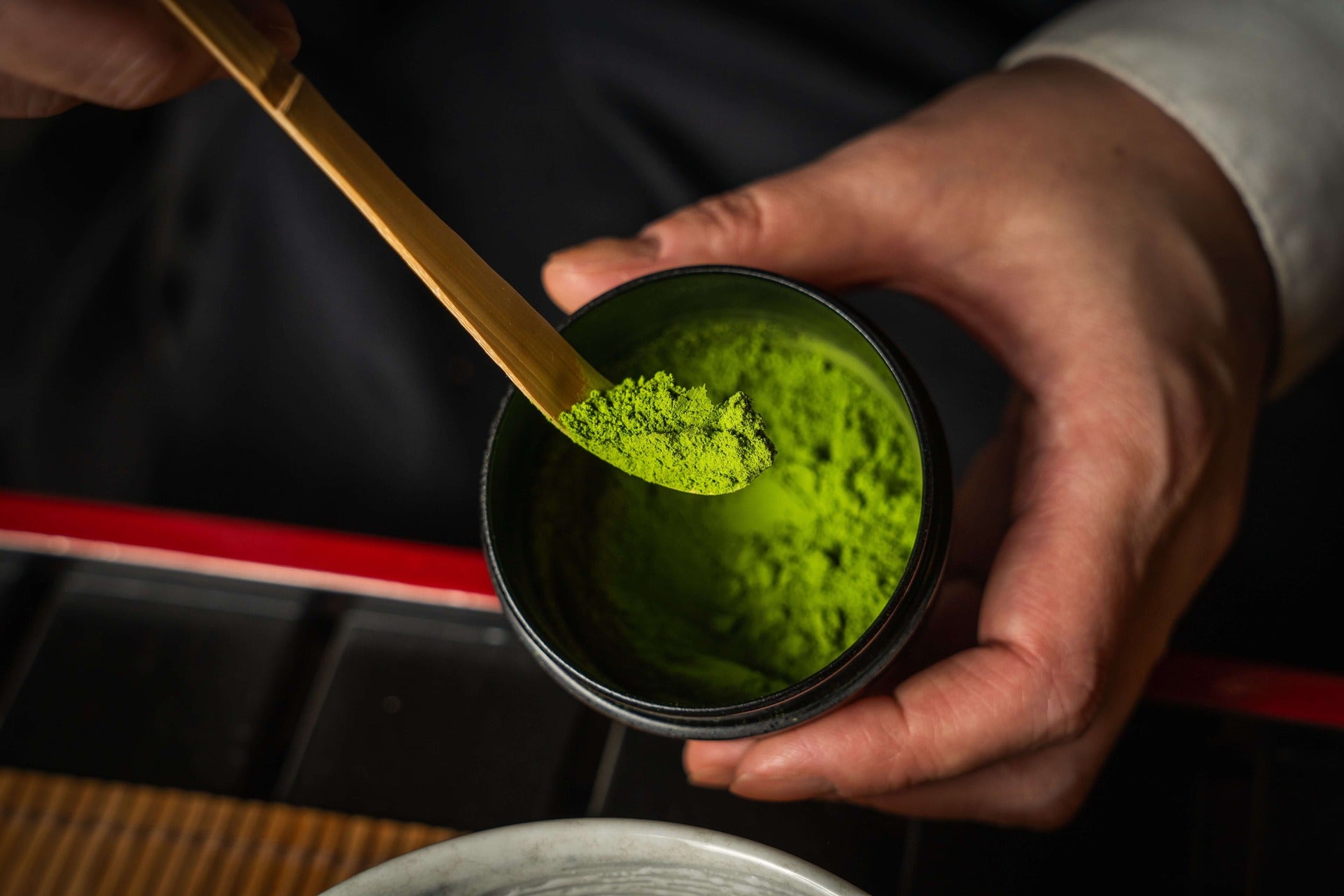





Brewing matcha tea is a simple yet ceremonial process that requires a little preparation. Follow along below and you'll be a pro! You'll need:
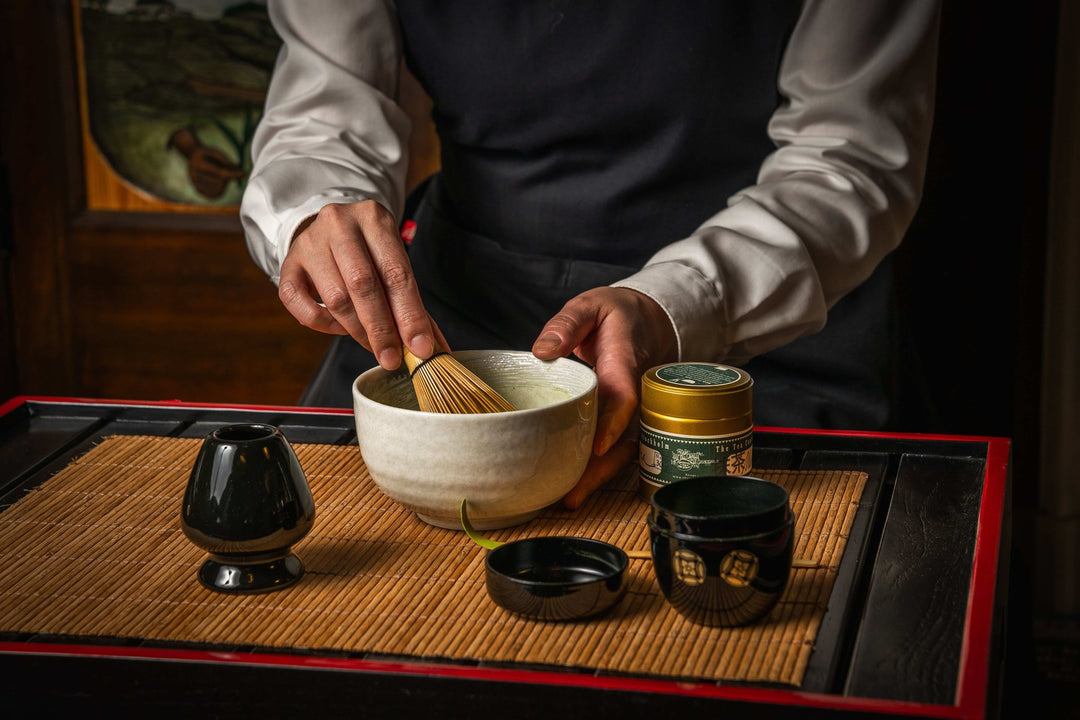
1. Sift the matcha powder: Take about 1–2 teaspoons (about 2 grams) of matcha powder and sift it through a fine-mesh tea strainer into your matcha bowl. This will help avoid lumps.
2. Add some water: Pour about 2 tablespoons of hot water (80°C) over the matcha powder. Do not use boiling water, as it can ruin the taste of the matcha.
3. Whisk: Use your bamboo whisk to mix the Matcha with the water. Whisk in a quick, Z- or M-shaped motion. The goal is to create a fine foam on the surface. If you are using a regular whisk, whisk vigorously to achieve the same result.
4. Add more water: When you have a nice foam, you can pour in more water, about 0.6 dl, but you can adjust the amount to your taste.
5. Drink immediately: Matcha should preferably be drunk immediately when freshly ground, to enjoy the fresh taste and texture.
Do you want to make a stronger version, so-called Koicha (thick Matcha), you use more matcha powder and less water, and you whisk more slowly to create a thicker consistency.
Hope you have an enjoyable matcha time!
While regular loose teas all have some amount of antioxidants, especially green teas, only a limited amount can be extracted in hot water. The remaining healthy substances stay in the leaves and are then thrown away. With Matcha, we can retain all of its nutrients and compounds without wasting any.
A bowl of Matcha is full of antioxidants and is equivalent to 10 cups of Japanese green tea.
According to the ORAC (oxygen radical absorbance capacity) antioxidant measurement scale, matcha has a rating of 1,300 units per gram (compared to pomegranates: 105 units per gram and blueberries: 91 units per gram)! Antioxidants can help boost the immune system and fight free radicals in the body that can contribute to inflammation, tissue damage, and aging. Metabolism - Matcha contains a special group of antioxidants called catechins, especially epigallocatechin gallate, or EGCG, which is known to boost metabolism. Matcha can have up to 137 times as much EGCG as regular green tea!
Yes! Matcha contains a special group of antioxidants called catechins, especially epigallocatechin gallate or EGCG, which is known to boost metabolism. Matcha can have up to 137 times as much EGCG as regular green tea!
Matcha is full of beneficial amino acids, especially L-theanine, which is unique to tea. This is the amino acid that stimulates the production of alpha waves in the brain, creating relaxation and concentration at the same time, providing alertness without the jitters and jitters like coffee. It helps with a steady release of energy over hours, which explains matcha's meditative origins.
As an antioxidant powerhouse, it makes sense that matcha can also help keep our skin clear and healthy. Due to its high concentration of antioxidants, especially the EGCG mentioned earlier, matcha can help inhibit cell degeneration that causes wrinkles, loss of collagen and thus elasticity in the skin, and other signs of aging. EGCG helps reduce inflammation and can also help reduce acne and even out skin tone. It can be applied both topically and ingested, so it’s perfect for a homemade face mask!